Senza categoria
High Water in Venice: When It Happens, How It Works and What the MOSE System Has Changed
10/10/2026
As autumn arrives, Venice prepares for one of the natural phenomena that have always shaped life in the lagoon: acqua alta, or high water.
Anyone planning a trip to the city between October and February may wonder whether this phenomenon could affect their visit, whether wellington boots are necessary, or whether it is still possible to walk through the narrow streets and squares when the tide rises.
The good news is that Venice now has a protection system that has significantly changed how the city manages the highest tides: the MOSE system.
Let’s take a closer look at when high water occurs, how the phenomenon works and what precautions you can take to enjoy Venice in every season.
High water is a phenomenon caused by rising tide levels, which can result from a combination of astronomical and meteorological factors.
The conditions that favour the most significant episodes occur mainly in autumn and winter, when astronomical tides can combine with winds and atmospheric conditions that push water towards the lagoon.
Historically, October, November and December are the months when high water occurs most frequently, with November generally among the most affected.
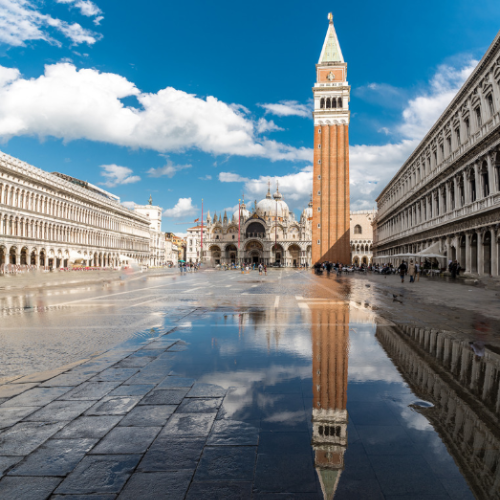
However, this does not mean that high water occurs every day or that every episode causes widespread flooding. The intensity varies from one event to another, and the effects also depend on the area of the city: lower-lying places, such as St Mark’s Square, are among the first to be affected.
In recent years, the way Venice deals with high water has changed thanks to MOSE, a system of movable barriers designed to protect the city and the lagoon from exceptionally high tides.
MOSE stands for Modulo Sperimentale Elettromeccanico, or Experimental Electromechanical Module. The system consists of barriers installed at the three inlets connecting the lagoon to the Adriatic Sea: Lido, Malamocco and Chioggia.
When forecasts indicate a potentially dangerous tide, the barriers rise from the seabed to temporarily separate the lagoon from the sea and limit the amount of water entering the lagoon.
Once the critical phase has passed, the barriers are lowered again and the normal exchange of water resumes.
The system began operating in 2020 and has significantly reduced the risk of widespread flooding in Venice’s historic centre during the most severe high-water events.
According to ISPRA data, between 2020 and 2024 there were only three occasions when water levels in the historic centre exceeded 110 centimetres: twice in 2020 and once in May 2024. Without the barriers, these episodes would have been more numerous.
MOSE has brought about a major change, but it does not mean that flooding can no longer occur in Venice.
Even when the barriers are operating, relatively minor high-water episodes can still affect the lowest parts of the city. Some areas may be affected before others, depending on pavement levels and local characteristics.
Furthermore, not every high tide necessarily requires the system to be activated. Decisions depend on forecasts and operating conditions.
For visitors, this means that they may occasionally encounter a flooded section of pavement or need to adjust their itinerary temporarily, without this necessarily disrupting activities throughout the city.
Exceptional events are now countered much more effectively by the protection system. However, it would not be accurate to rule out every possible risk, so it is always important to follow official alerts.
If a high tide is forecast during your visit to Venice, a few simple precautions can help you plan your day.
In the event of an alert, always follow the authorities’ instructions and pay attention to the actual conditions on streets and pedestrian routes.
If you want to know whether high water is expected during your stay, the main source of information is the City of Venice Tide Forecast and Reporting Centre.
Its official website provides bulletins, real-time observations, tide charts and information about alerts.
Check the City of Venice Tide Forecast and Reporting Centre before travelling and throughout your stay.
High water is part of Venice’s history and identity, but the introduction of MOSE has significantly changed how the city manages the most important high-tide events.
Autumn and winter remain wonderful seasons to visit the lagoon. The light takes on distinctive shades, walks become more peaceful, and museums, palaces and narrow streets offer countless opportunities to discover the city from a different perspective.
By checking forecasts and taking a few simple precautions, you can plan your visit with greater peace of mind, remembering that conditions may change from one day to the next.
The advice is simple: check the information before travelling, follow updates during your stay and enjoy the charm of Venice even in the most atmospheric season of the year.